Harvard / edX vs MIT
A detailed comparison of Harvard / edX and MIT for AI and machine learning courses, covering course catalog, ratings, pricing, and certifications.
Our Verdict
Harvard / edX provides a well-rounded approach to AI with strong emphasis on ethics, data science, and introductory CS through CS50, while MIT goes deeper into mathematical theory and algorithmic foundations. Harvard is excellent for beginners and interdisciplinary learners, MIT for those seeking rigorous technical depth.
Harvard / edX vs MIT: the details
Harvard / edX
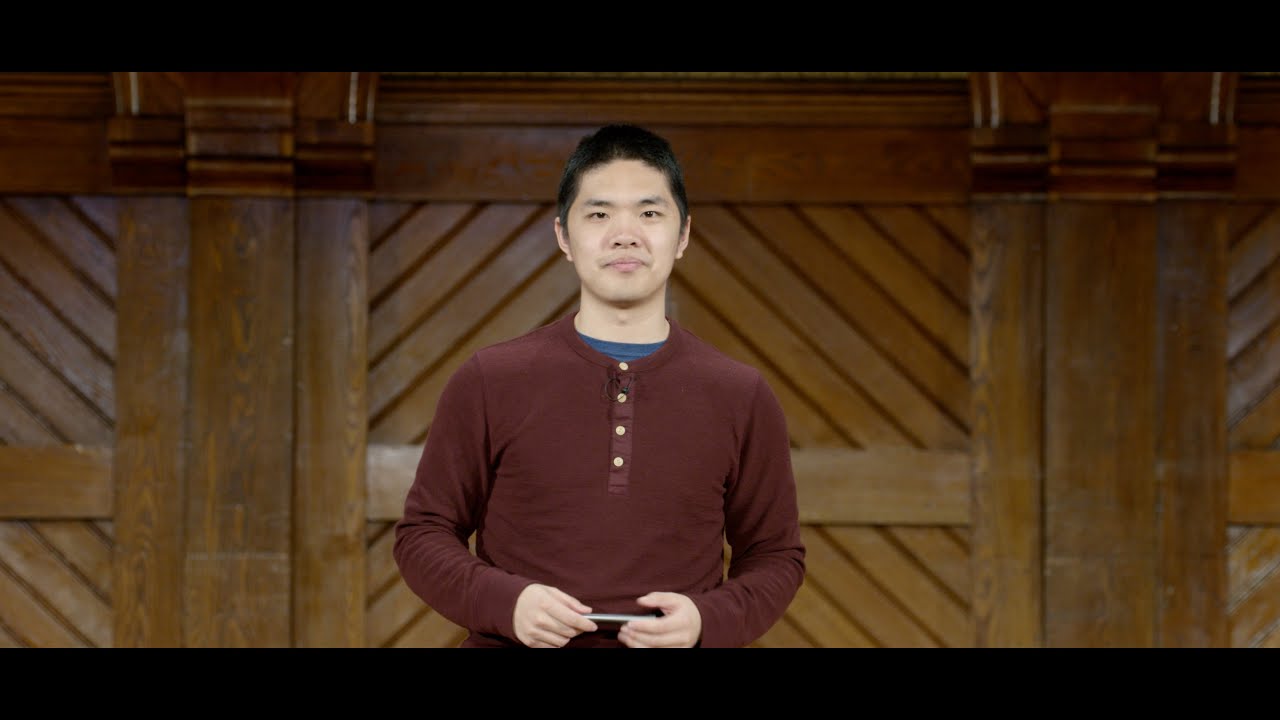
Harvard University's flagship AI offering on edX is CS50's Introduction to Artificial Intelligence with Python (CS50 AI), a free, self-paced HarvardX course taught by Professor David J. Malan and Senior Preceptor Brian Yu that runs 7 weeks at roughly 10-30 hours per week. It teaches the foundations of modern AI, organized into seven weekly topics: Search, Knowledge, Uncertainty, Optimization, Learning, Neural Networks, and Language, all built through hands-on Python projects (Tic-Tac-Toe, Minesweeper, PageRank, a Nim reinforcement-learning agent, and more). The course content is free to audit; a verified certificate costs $299 on edX, while the same lectures and projects are also available free via Harvard's OpenCourseWare without a certificate. It is best understood as a rigorous, project-oriented academic introduction to AI fundamentals rather than a practical bootcamp in production machine-learning engineering.
Best for: Learners who already know Python (CS50x or roughly a year of Python experience) and want a rigorous, free, university-grade grounding in the algorithms and concepts behind AI; people building a portfolio of AI coding projects; and self-directed students who value academic depth and the Harvard/HarvardX brand on a resume.
Pricing: Freemium / audit-free with paid certificate. The course is free to audit on edX and free to follow via Harvard OpenCourseWare; an optional edX verified certificate costs $299. Certificates can also be earned via Harvard Extension School or Summer School for transfer credit (separate paid enrollment). edX verified certificates across HarvardX typically range from about $50 to $300, and edX commonly offers financial assistance on verified tracks.
Strengths
- Free to audit with full access to lectures, twelve projects, and quizzes; the identical material is also offered free via Harvard OpenCourseWare, so the paywall is only the optional certificate.
- Strong academic curriculum that systematically covers AI foundations end to end, from graph search and constraint satisfaction through optimization, machine learning, neural networks, and natural language processing.
- Heavily project-based: learners write real Python programs (game-playing agents, Minesweeper solver, PageRank, reinforcement-learning Nim, traffic-sign neural net) that build a tangible AI portfolio.
- Taught by Harvard's well-regarded CS50 team (David J. Malan and Brian Yu), carrying recognized HarvardX/edX brand credibility that signals commitment to employers.
Weaknesses
- Steep prerequisite barrier: it assumes solid Python and data-structures knowledge and explicitly does not teach Python fundamentals, so beginners often struggle or must complete CS50x first.
- Manual grading of projects can be slow (reviewers report waits of up to about three weeks), which interrupts momentum compared with auto-graded platforms.
- Independent reviewers note the lecture videos are less engaging than the in-person CS50 experience (recorded largely during the pandemic, mostly a single presenter), so production energy is lower.
MIT
MIT's AI/ML teaching reaches the public mainly through its free, open Introduction to Deep Learning course (6.S191), led by Alexander Amini and Ava Amini with faculty sponsor Daniela Rus. It is a fast, high-intensity bootcamp covering neural networks, computer vision, sequence modeling/NLP, generative models, and reinforcement learning, with hands-on labs (music generation, facial-detection debiasing, LLM fine-tuning) that run free in Google Colab and are open-sourced under the MIT License (the GitHub lab repo has roughly 8.7k stars). The materials are genuinely free and self-paced, but the open version carries no formal certificate and assumes calculus and linear algebra; MIT's paid, certificate-bearing AI/ML training lives in separate units (MIT xPRO and MIT Professional Education). Independent firsthand review is mixed-positive: a published MIT Admissions student review scored the class 6/10, praising the instruction while flagging a punishing pace and buggy lab infrastructure.
Best for: Learners with some calculus, linear algebra, and Python who want a rigorous, current, completely free survey of modern deep learning (including LLMs and generative AI) from a top-tier institution, and who value world-class lecturing plus open Colab labs over a paid certificate.
Pricing: Free and open for the 6.S191 Introduction to Deep Learning lectures and labs (no tuition, no certificate). MIT's certificate-bearing AI/ML training is sold separately and is not free: MIT xPRO programs run around $2,600, and MIT Professional Education short courses range roughly $2,500-$4,700 each (a professional certificate requires completing 16+ qualifying days).
Strengths
- Genuinely free and open: all 6.S191 lectures are public, and the lab code is open-sourced under the MIT License and self-paced in Google Colab with no downloads
- World-class instruction widely praised by learners; the MIT brand and faculty (Amini, Amini, Daniela Rus) carry strong credibility
- Curriculum stays current with cutting-edge topics, including large language models and generative AI, refreshed roughly annually
- Practical, engaging labs (music generation, facial-detection/debiasing, LLM fine-tuning) tie theory to real applications
Weaknesses
- Very fast, compressed pace: a firsthand MIT Admissions review rated pacing 4/10, noting CNNs, VAEs, and GANs were covered in a single day before jumping to reinforcement learning
- The free 6.S191 track provides no formal certificate; MIT's verifiable AI/ML credentials require separate paid programs (MIT xPRO ~$2,600; MIT Professional Education courses roughly $2,500-$4,700)
- Lab infrastructure can frustrate: the same reviewer cited Colab GPU limits, expired API keys, and buggy code cells, with one lab consuming 6+ hours without a result