
Best AI Courses for HR Professionals
Human resources is being transformed by AI across the entire employee lifecycle — from talent acquisition and onboarding to performance management and retention. AI-powered recruiting tools can screen resumes and identify top candidates faster, people analytics platforms predict turnover risk, and chatbots handle routine employee inquiries around the clock. HR professionals who understand AI can make more data-driven workforce decisions while ensuring fairness and compliance. These courses will help you understand how machine learning and natural language processing power modern HR technology, learn to evaluate AI recruiting and analytics tools critically, and navigate the important ethical considerations around bias detection and privacy in AI-driven HR practices. Building AI literacy will position you as a strategic partner in your organization's digital transformation.
Key AI Skills for HR Professionals
- Evaluate and implement AI recruiting and screening tools
- Use workforce analytics for data-driven HR decisions
- Detect and mitigate algorithmic bias in hiring processes
- Apply NLP tools for employee sentiment analysis
- Automate routine HR workflows with AI assistants
- Ensure AI compliance with employment regulations
How to Start Learning AI as a HR Professional
Start with an AI ethics and fairness course to understand bias in AI hiring tools and how to evaluate vendors for equitable outcomes (estimated 10-15 hours).
Take a data science fundamentals course to build fluency with the analytics concepts behind workforce planning, attrition modeling, and employee engagement scoring (estimated 20-25 hours).
Explore NLP and LLM courses to understand how AI processes job descriptions, resumes, employee surveys, and internal communications (estimated 15-20 hours).
Recommended Courses for HR Professionals
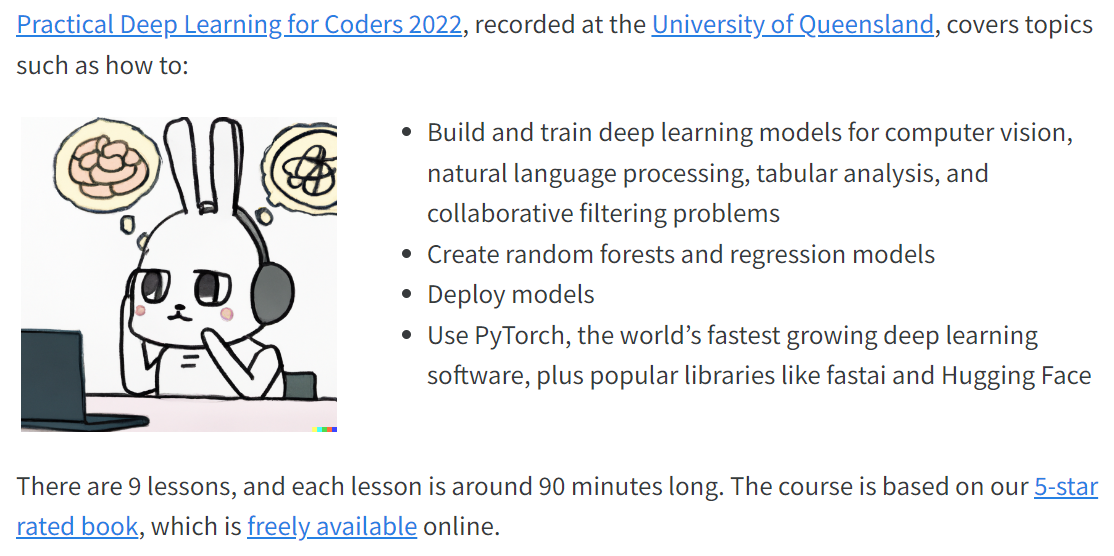
Practical Deep Learning for Coders
fast.ai

Introduction to Deep Learning
MIT

Machine Learning Crash Course

CS50's Introduction to Artificial Intelligence with Python
Harvard / edX

NLP Course
Hugging Face

Natural Language Processing with Deep Learning
Stanford Online

Azure AI Fundamentals
Microsoft Learn

Elements of AI
University of Helsinki

Machine Learning Scientist with Python
DataCamp

AI For Everyone
Coursera

Natural Language Processing Specialization
Coursera

TensorFlow Developer Professional Certificate
Coursera

Google Advanced Data Analytics Professional Certificate
Coursera

IBM AI Engineering Professional Certificate
Coursera

Mathematics for Machine Learning and Data Science Specialization
Coursera

MicroMasters in Statistics and Data Science
edX

Machine Learning
edX

Artificial Intelligence
edX

Machine Learning with Python: from Linear Models to Deep Learning
edX
Python Basics for Data Science
edX
Principles of Machine Learning
edX

Data Science: Machine Learning
edX

Machine Learning A-Z: AI, Python & R
Udemy

Python for Data Science and Machine Learning Bootcamp
Udemy

NLP - Natural Language Processing with Transformers in Python
Udemy

TensorFlow Developer Certificate in 2024: Zero to Mastery
Udemy

Complete Machine Learning & Data Science Bootcamp 2024
Udemy
Computational Linear Algebra
fast.ai
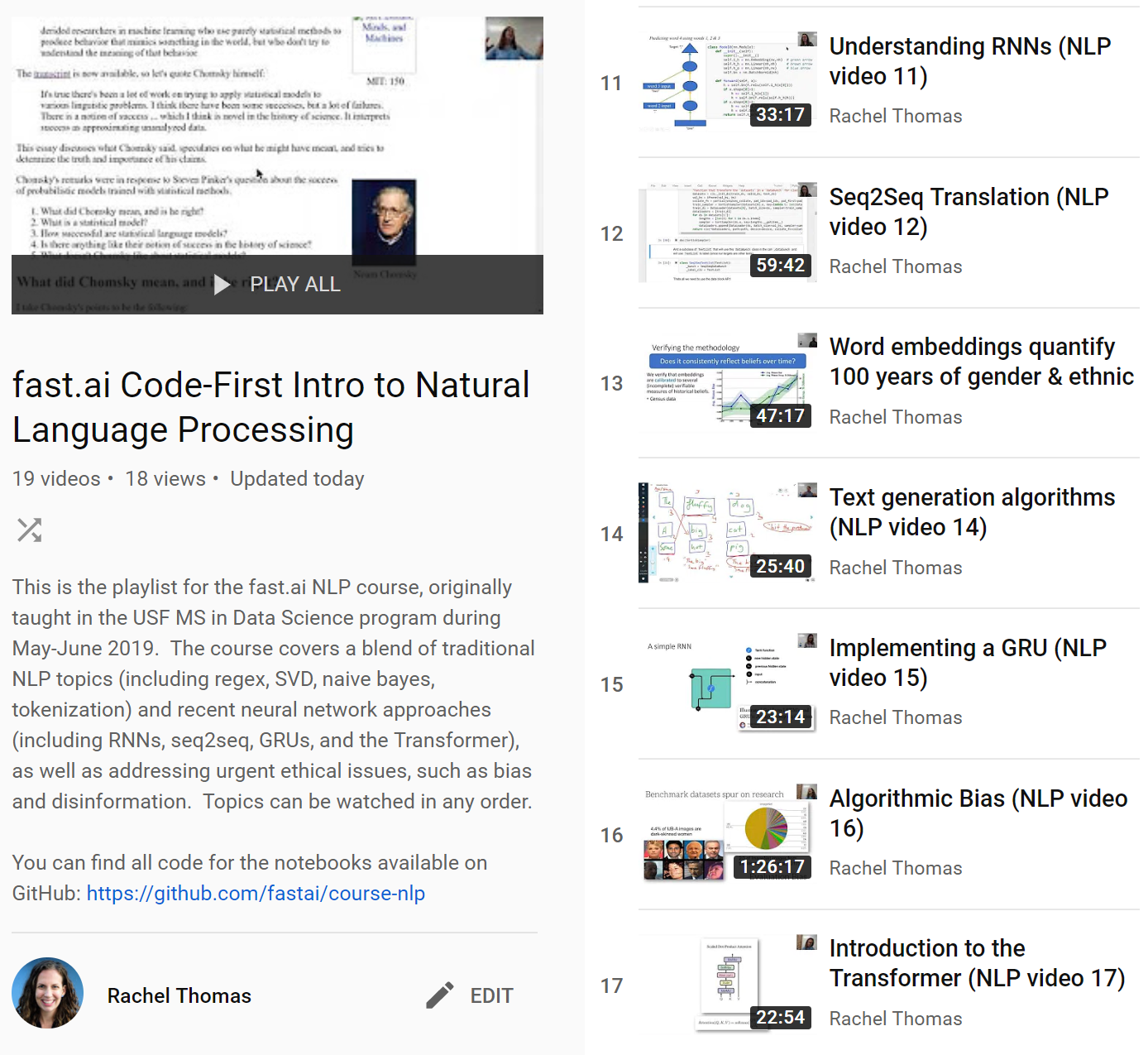
A Code-First Introduction to NLP
fast.ai
Introduction to Machine Learning
MIT OpenCourseWare
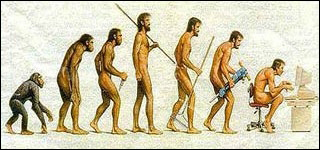
Artificial Intelligence
MIT OpenCourseWare

Machine Learning for Healthcare
MIT OpenCourseWare

Intro to TensorFlow for Deep Learning

Intermediate Machine Learning
Kaggle
Feature Engineering
Kaggle
Natural Language Processing
Kaggle
Time Series
Kaggle
Intro to AI Ethics
Kaggle

Azure AI Engineer Associate
Microsoft Learn
Machine Learning for Beginners
Microsoft
AI for Beginners
Microsoft
Azure Data Scientist Associate
Microsoft Learn

IBM AI Developer Professional Certificate
Coursera

Machine Learning with Python
Coursera
Natural Language Processing Nanodegree
Udacity

Introduction to Natural Language Processing in Python
DataCamp
Data Scientist with Python Career Track
DataCamp

Artificial Intelligence Foundations: Machine Learning
LinkedIn Learning
Machine Learning with Python: Foundations
LinkedIn Learning
NLP with Python for Machine Learning Essential Training
LinkedIn Learning
Introduction to Generative AI
LinkedIn Learning

Google Machine Learning Engineer Professional Certificate
Coursera

AWS Certified Machine Learning Specialty 2024
Udemy
Large Language Models with Semantic Search
DeepLearning.AI
Open Source Models with Hugging Face
DeepLearning.AI
Google Cloud: Introduction to AI and Machine Learning
edX
Ethics in the Age of Generative AI
LinkedIn Learning

IBM Data Science Professional Certificate
Coursera

Data Scientist Nanodegree
Udacity

Responsible AI Principles and Practices
Microsoft Learn

How Google Does Machine Learning
Coursera

The Data Science Course: Complete Data Science Bootcamp
Udemy
Data Science Essentials
edX

Responsible AI: Applying AI Principles with Google Cloud
Google Cloud

Extreme Gradient Boosting with XGBoost
DataCamp

Professional Certificate in Data Science
edX
Carbon Aware Computing for GenAI Developers
DeepLearning.AI

AI for Medicine Specialization
Coursera

Modern Natural Language Processing in Python
Udemy
Understanding and Applying Text Embeddings
DeepLearning.AI

Ethics of AI
University of Helsinki
Machine Learning Fundamentals
edX

Introduction to Vertex AI
Google Cloud

Bayesian Machine Learning in Python: A/B Testing
Udemy
Introduction to Statistics in Python
DataCamp
Building AI Applications with Watson APIs
Coursera
AI Ethics
Coursera

Feature Engineering for Machine Learning
Udemy
AWS Machine Learning Foundations
Udacity

Preprocessing for Machine Learning in Python
DataCamp
Probability - The Science of Uncertainty and Data
edX
Introduction to LLMs in Python
DataCamp
Artificial Intelligence Fundamentals
IBM SkillsBuild
Frequently Asked Questions
Is AI in hiring biased?
AI hiring tools can inherit and amplify biases from historical data. However, well-designed AI systems can also help reduce human bias by standardizing evaluations. The key is understanding how to audit AI tools for fairness and choosing vendors who prioritize bias detection and mitigation.
What AI tools are HR professionals using today?
Common AI tools in HR include applicant tracking systems with AI screening, chatbots for employee self-service, people analytics platforms for retention prediction, AI-powered learning management systems, and sentiment analysis tools for employee engagement surveys.
How does AI impact employee privacy?
AI tools that monitor employee behavior, analyze communications, or predict performance raise significant privacy concerns. HR professionals must balance organizational needs with employee rights, ensuring transparency about data collection and compliance with privacy regulations.
Do HR professionals need technical skills for AI?
You do not need to code, but you should understand AI concepts well enough to evaluate vendor claims, interpret analytics dashboards, and ask informed questions about how AI tools make decisions. A 20-30 hour investment in foundational courses is sufficient.