
Best AI Courses for Cybersecurity Professionals
AI is becoming both the most powerful weapon and the most critical defense in cybersecurity. From AI-powered threat detection and automated incident response to adversarial machine learning and LLM-based attack vectors, cybersecurity professionals need deep AI knowledge to protect modern systems. These courses will help you understand how machine learning models detect anomalies and malware, how attackers exploit AI systems, and how to build AI-augmented security operations that stay ahead of evolving threats.
Key AI Skills for Cybersecurity Professionals
- Build ML-based threat detection and anomaly detection systems
- Understand adversarial machine learning and AI attack vectors
- Use AI tools for automated vulnerability assessment
- Analyze security logs and network traffic with ML techniques
- Evaluate and defend against AI-powered social engineering
- Implement AI-driven incident response automation
How to Start Learning AI as a Cybersecurity Professional
Start with a machine learning fundamentals course to understand how classification, anomaly detection, and pattern recognition models work (estimated 30-40 hours).
Take a deep learning course to learn about neural networks used in advanced threat detection, malware analysis, and natural language processing for security applications (estimated 30-40 hours).
Explore specialized AI security topics like adversarial ML, LLM security risks, and AI-powered penetration testing to stay ahead of emerging threats (estimated 20-30 hours).
Recommended Courses for Cybersecurity Professionals

Machine Learning
Stanford Online

Deep Learning Specialization
Coursera
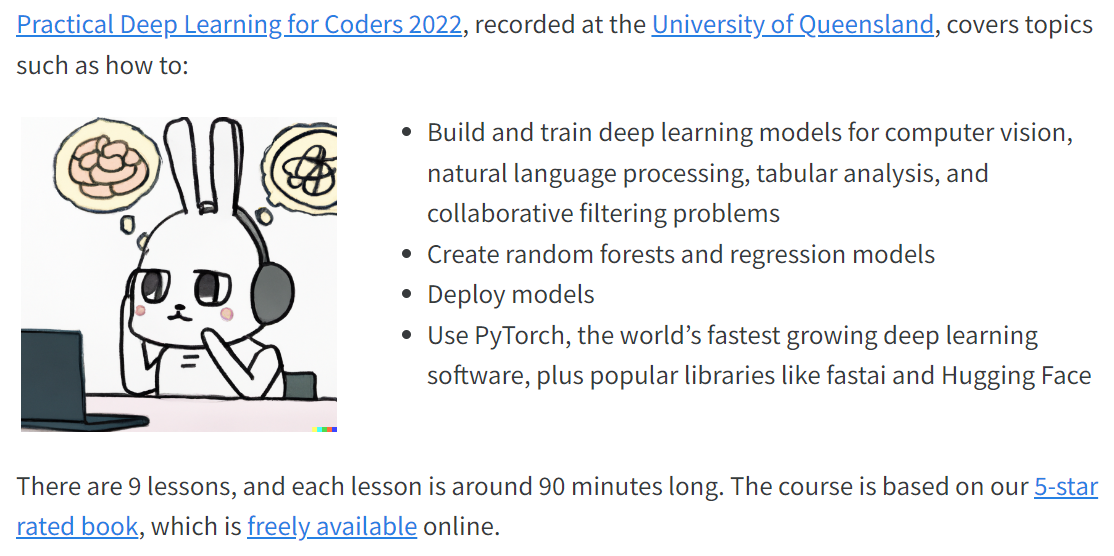
Practical Deep Learning for Coders
fast.ai

Introduction to Deep Learning
MIT

Machine Learning Crash Course

CS50's Introduction to Artificial Intelligence with Python
Harvard / edX

Generative AI with Large Language Models
Coursera

Intro to Deep Learning
Kaggle

Intro to Machine Learning with PyTorch
Udacity
LangChain for LLM Application Development
DeepLearning.AI
Machine Learning Specialization
Coursera

Elements of AI
University of Helsinki

Deep Learning
NYU

Machine Learning Scientist with Python
DataCamp

AI For Everyone
Coursera

Google Advanced Data Analytics Professional Certificate
Coursera

IBM AI Engineering Professional Certificate
Coursera

Generative Adversarial Networks (GANs) Specialization
Coursera

Mathematics for Machine Learning and Data Science Specialization
Coursera

MicroMasters in Statistics and Data Science
edX

Machine Learning
edX

Artificial Intelligence
edX

Machine Learning with Python: from Linear Models to Deep Learning
edX

Deep Learning Fundamentals with Keras
edX
Principles of Machine Learning
edX

Data Science: Machine Learning
edX

Machine Learning A-Z: AI, Python & R
Udemy

Python for Data Science and Machine Learning Bootcamp
Udemy

Deep Learning A-Z 2024: Neural Networks, AI & ChatGPT
Udemy

LangChain Masterclass - Build 15 LLM Apps with LangChain
Udemy

PyTorch for Deep Learning & Machine Learning
Udemy

TensorFlow Developer Certificate in 2024: Zero to Mastery
Udemy

Generative AI, LLMs - OpenAI API, LangChain, Hugging Face
Udemy

Complete Machine Learning & Data Science Bootcamp 2024
Udemy

Deep Learning and Computer Vision A-Z: OpenCV, SSD & GANs
Udemy
Finetuning Large Language Models
DeepLearning.AI
LangChain: Chat with Your Data
DeepLearning.AI
AI Agents in LangGraph
DeepLearning.AI
Vector Databases: from Embeddings to Applications
DeepLearning.AI
Quality and Safety for LLM Applications
DeepLearning.AI
Building and Evaluating Advanced RAG Applications
DeepLearning.AI
How Diffusion Models Work
DeepLearning.AI
Preprocessing Unstructured Data for LLM Applications
DeepLearning.AI
Pair Programming with a Large Language Model
DeepLearning.AI
Knowledge Graphs for RAG
DeepLearning.AI
Building Multimodal Search and RAG
DeepLearning.AI
Automated Testing for LLMOps
DeepLearning.AI
Build an LLM App with LangChain.js
DeepLearning.AI

Practical Deep Learning for Coders Part 2: Deep Learning Foundations to Stable Diffusion
fast.ai
Deep Learning
Stanford Online
Deep Multi-Task and Meta Learning
Stanford Online

Introduction to Machine Learning
MIT OpenCourseWare

Artificial Intelligence
MIT OpenCourseWare

Machine Learning for Healthcare
MIT OpenCourseWare

Introduction to Generative AI Learning Path
Google Cloud

Intro to TensorFlow for Deep Learning
Intermediate Machine Learning
Kaggle
Feature Engineering
Kaggle
Time Series
Kaggle
Machine Learning for Beginners
Microsoft
AI for Beginners
Microsoft
Generative AI for Beginners
Microsoft

Azure Data Scientist Associate
Microsoft Learn

Machine Learning with Python
Coursera

Introduction to Deep Learning & Neural Networks with Keras
Coursera

AI Programming with Python Nanodegree
Udacity

Deep Learning in Python
DataCamp
Data Scientist with Python Career Track
DataCamp

Artificial Intelligence Foundations: Machine Learning
LinkedIn Learning
Machine Learning with Python: Foundations
LinkedIn Learning
Introduction to Generative AI
LinkedIn Learning
Deep Learning: Getting Started
LinkedIn Learning

Google Machine Learning Engineer Professional Certificate
Coursera

Prompt Engineering Specialization
Coursera
AI Agents & RAG: Build 10 Real AI Agent Apps with LangChain
Udemy

AWS Certified Machine Learning Specialty 2024
Udemy
Large Language Models with Semantic Search
DeepLearning.AI
Open Source Models with Hugging Face
DeepLearning.AI
Quantization Fundamentals with Hugging Face
DeepLearning.AI

Serverless LLM Apps with Amazon Bedrock
DeepLearning.AI
Google Cloud: Introduction to AI and Machine Learning
edX

Building AI Agents with Hugging Face
Hugging Face
Prompt Engineering: How to Talk to the AIs
LinkedIn Learning

IBM Data Science Professional Certificate
Coursera

Generative AI: Introduction and Applications
Coursera

Generative AI: Prompt Engineering Basics
Coursera

Data Scientist Nanodegree
Udacity
Generative AI Concepts
DataCamp
Introduction to Deep Learning with PyTorch
DataCamp

How Google Does Machine Learning
Coursera

Introduction to TensorFlow for AI, ML, and DL
Coursera

The Data Science Course: Complete Data Science Bootcamp
Udemy
Prompt Engineering with Llama 2 & 3
DeepLearning.AI
Building Event-Driven Generative AI Applications
DeepLearning.AI

Generative AI Nanodegree
Udacity
Machine Learning with Graphs
Stanford Online

Extreme Gradient Boosting with XGBoost
DataCamp

Professional Certificate in Data Science
edX
Computer Vision: Deep Learning with Python
LinkedIn Learning

AI for Medicine Specialization
Coursera
Introduction to Generative AI Studio
Google Cloud

IBM Generative AI Engineering Professional Certificate
Coursera
Efficiently Serving LLMs
DeepLearning.AI
Multi AI Agent Systems with crewAI
DeepLearning.AI
Machine Learning Fundamentals
edX
Azure OpenAI Service Fundamentals
Microsoft Learn

Introduction to Vertex AI
Google Cloud

Bayesian Machine Learning in Python: A/B Testing
Udemy

Python for Time Series Data Analysis
Udemy
TensorFlow: Essential Training
LinkedIn Learning

Deep Neural Networks with PyTorch
Coursera

Feature Engineering for Machine Learning
Udemy

Open-Source AI Cookbook
Hugging Face
AWS Machine Learning Foundations
Udacity

Preprocessing for Machine Learning in Python
DataCamp
LangChain Essential Training
LinkedIn Learning
LLMOps
DeepLearning.AI
Introduction to LLMs in Python
DataCamp
PyTorch Essential Training: Deep Learning
LinkedIn Learning
Anthropic's Prompt Engineering Interactive Tutorial
Anthropic
Machine Learning with Python
freeCodeCamp
Artificial Intelligence Fundamentals
IBM SkillsBuild
Frequently Asked Questions
How is AI used in cybersecurity?
AI is used for real-time threat detection, malware classification, network anomaly detection, automated incident response, phishing detection, and user behavior analytics. ML models can process vast amounts of security data far faster than human analysts.
Do cybersecurity professionals need to code ML models?
Understanding how models work is essential, but you do not always need to build them from scratch. Many security platforms provide ML-based features. However, knowing Python and ML basics helps you customize tools, evaluate solutions, and detect AI-powered attacks.
What are the biggest AI-related security threats?
Key threats include AI-generated phishing and deepfakes, adversarial attacks on ML models, prompt injection in LLM-based systems, data poisoning of training sets, and automated vulnerability discovery by attackers using AI tools.